The Importance of Consistent Watering Routines for New Gardeners
Understanding the Art of Watering in Your Garden
For new gardeners, the world of plant care can often feel like navigating a complex puzzle. One of the most vital pieces of this puzzle is establishing consistent watering routines. Failing to provide adequate hydration can result in even the most meticulously planned gardens failing to thrive. To cultivate a flourishing garden, it’s essential to comprehend the dynamics of watering and the significance it plays in plant health.
Why is maintaining a consistent watering schedule so crucial? Here are several vital reasons:
- Plant Growth: Regular watering is fundamental for healthy root development. Roots that have access to consistent moisture are better equipped to absorb essential nutrients, which promote robust growth. This process is especially important during a plant’s initial stages, as young plants are particularly vulnerable and require stable conditions.
- Soil Health: Moist soil nurtures beneficial microorganisms that are integral to the garden ecosystem. These microorganisms break down organic matter, enhance nutrient availability, and contribute to soil structure. This biologically active soil supports vibrant plant life and improves overall garden resilience.
- Fungal Prevention: A well-balanced watering strategy can help prevent issues related to both drought and overwatering. Too much moisture can lead to fungal diseases, such as root rot or powdery mildew, significantly hampering plant health. By keeping moisture levels in check, you create an environment that minimizes disease risk.
Many novice gardeners often misjudge the timing and quantity of water their plants require. Understanding best practices can significantly impact plant vitality and is influenced by several factors:
- Climate: In regions with hot summers—like the southwestern United States—deeper watering is often necessary to ensure that water penetrates the roots effectively. Conversely, cooler, wetter climates might have different requirements, as excess moisture can lead to various problems.
- Soil Type: The type of soil present in your garden profoundly affects water retention. For example, sandy soils drain quickly, which may necessitate more frequent watering, whereas clay soils can hold moisture longer, requiring less frequent irrigation.
- Plant Type: Different plants exhibit unique water needs that evolve with their growth stages. For instance, young seedling transplants might require more frequent watering—every few days—while established plants may thrive on less regular schedules.
By delving into the importance of a well-thought-out watering strategy, gardeners can craft optimal conditions for their plants. Mastering this fundamental technique does not merely safeguard plant survival; it enhances their capacity for spectacular growth, vibrant blooms, and bountiful yields. With time and careful observation, any gardener can learn to anticipate their plants’ needs, allowing them to genuinely blossom in their carefully curated outdoor space.
DISCOVER MORE: Click here to learn about composting’s impact
Factors Influencing Watering Needs in Your Garden
While the necessity of a consistent watering routine is clear, many novice gardeners may still find themselves perplexed by the variables that influence how and when to water their plants. Understanding these factors is fundamental to ensuring healthy plants and a thriving garden. Let’s take a deeper dive into the crucial elements that determine your watering schedule:
- Seasonal Changes: As seasons shift, so do the watering needs of your garden. In spring and summer, when temperatures rise and evaporation increases, plants often require more water. However, during fall and winter months, many plants enter a dormant stage and significantly reduce their water intake. New gardeners should adjust their routines seasonally to accommodate these variations, ensuring that plants receive adequate hydration without drowning them.
- Sun Exposure: Garden areas that receive full sun will typically dry out faster than shaded regions. New gardeners should closely monitor the soil moisture in different areas of their garden. Utilizing a simple soil moisture gauge can provide intuitive feedback, helping determine when it’s time to water. Adjusting watering schedules based on sun exposure not only conserves resources but also improves plant health.
- Plant Grouping: Another essential consideration is the variation of water needs among different plant families. Grouping plants with similar watering requirements can create a more uniform watering routine, making garden care less daunting. For instance, succulents and cacti thrive in drier conditions and should be planted away from thirstier plants, such as ferns or leafy greens, which need more consistent moisture.
It’s also important to observe how well your garden retains moisture. Critical to maintaining a consistent watering routine, effective mulching can significantly impact soil moisture levels. Applying organic mulch around plants not only suppresses weeds but also slows down evaporation, thus extending the time between watering. New gardeners should consider experimenting with mulching techniques to see which works best for their unique garden environment.
Recognizing that every garden has its own distinct needs is a vital step towards mastery. Keeping a gardening journal can be prudent for tracking rainfall, temperature changes, and the hydration status of plants throughout the year. This practice not only cultivates a better understanding of your garden’s ecosystem but also promotes an intuitive approach to adjusting watering schedules as conditions change, thereby enhancing overall plant growth.
As you navigate this journey, remember that the art of watering is as much a science as it is an intuitive process. With patience, attention, and a well-informed strategy, any new gardener can forge a successful relationship with their plants, fostering an environment where life can truly thrive.
| Category | Benefits |
|---|---|
| Consistency | Consistent watering leads to healthier plants by promoting stronger root systems and reducing transplant shock. |
| Water Schedule | Establishing a watering schedule helps in the even distribution of moisture, preventing potential problems like overwatering or underwatering. |
Understanding the significance of consistent watering is crucial for new gardeners embarking on their gardening journey. The act of watering may seem simple, but it profoundly affects plant health. A well-executed watering strategy aids in the creation of an optimal growing environment. For instance, frequent and inadequate watering can lead to weak plant development. To counter this, new gardeners should consider creating a watering calendar, thereby ensuring that plants receive the necessary water at the right intervals. In addition, monitoring weather conditions can aid adjustments as needed. Furthermore, employing techniques such as deep watering promotes healthier plants by encouraging roots to grow deeper, making them less reliant on surface moisture. With such practices, new gardeners will not only watch their gardens thrive but also experience the joy of nurturing nature. By focusing on these consistent watering practices, they are laying a solid foundation for a flourishing garden.
DISCOVER MORE: Click here to learn about companion planting and pest management
Understanding Different Watering Methods
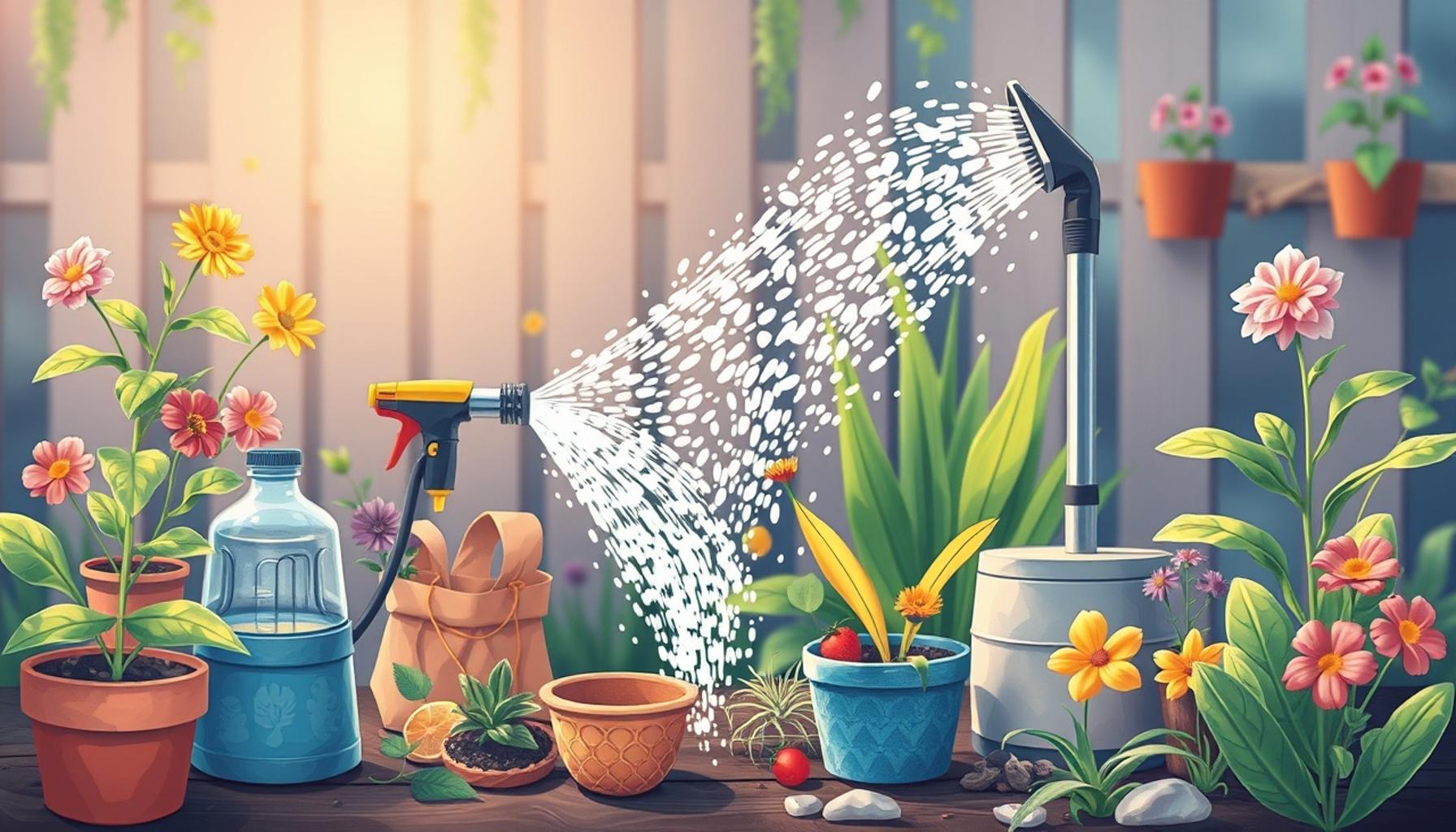
New gardeners are often faced with choices about how to water their plants effectively. The method of watering can significantly influence both the enjoyment of gardening and the health of your plants. There are several approaches, each with distinct advantages and disadvantages. Let’s explore these methods to identify which may best suit your gardening needs:
- Drip Irrigation: This method involves a network of tubes and emitters that deliver water directly to the roots of plants. It is highly efficient, reducing water wastage and allowing for more precise control over water distribution. Particularly beneficial for new gardeners, a drip irrigation system can help ensure consistent moisture, while reducing the risk of fungal diseases associated with over-saturation. Though initial setup may require some investment, the long-term benefits in terms of water conservation and plant health can be substantial.
- Soaker Hoses: Similar to drip irrigation, soaker hoses provide a simple solution for efficient watering. Laid directly on the soil surface or buried under mulch, these hoses release water slowly along their length, promoting deep-root watering without excessive surface moisture. New gardeners appreciate the straightforward nature of soaker hoses, as they require little maintenance and can easily be incorporated into existing garden layouts.
- Hand Watering: Using a watering can or hose may seem basic, yet hand watering can be incredibly effective, especially for small gardens or potted plants. This method allows you to connect directly with your garden, as you examine each plant while watering. New gardeners often find value in this hands-on approach, fostering a deeper relationship with their plants. However, it necessitates careful observation to ensure water is being applied evenly and adequately.
- Sprinkler Systems: While traditional oscillating or stationary sprinklers are commonly available, they are less efficient for targeted watering. Sprinklers are typically best for lawns or larger garden areas. New gardeners may be tempted by their ease of use; however, understanding the relationship between this method and evaporation loss is vital. To enhance effectiveness, utilize sprinklers in the early morning or late evening when evaporation is lowest.
In addition to the methods listed above, timing and technique play significant roles in establishing a consistent watering routine. For instance, watering deeply but infrequently encourages plants to develop deeper root systems, fostering resilience during periods of drought. As a rule of thumb, aim to water early in the day to allow plants to absorb moisture before the heat of the sun intensifies. Conversely, avoid watering late in the evening, as prolonged moisture on the foliage can promote diseases.
Temperature and weather affect how quickly soil dries out, making it important for new gardeners to remain vigilant throughout varying conditions. Rainfall is often unpredictable, and even a light shower may not penetrate deeply enough to reach root systems, which underscores the necessity of regular monitoring. Consider incorporating both rain gauges and soil moisture sensors to aid in making informed watering decisions, keeping your garden consistently hydrated.
A consistent approach to watering ensures your plants receive as much moisture as they require, promoting robust growth and minimizing the risk of disease. As you experiment with various watering methods and timing, you will become more attuned to the specific needs of your garden, building the foundation of expertise that every effective gardener needs.
DIVE DEEPER: Click here to learn about proper irrigation techniques
Conclusion: Cultivating Success Through Consistency
Establishing a consistent watering routine is a cornerstone of successful gardening, particularly for novice gardeners. By understanding various watering methods—from drip irrigation and soaker hoses to traditional hand watering—new gardeners can tailor their approach to best meet the specific needs of their plants and garden layout. Each method offers unique advantages, but what remains essential is the rhythm of regularity.
A well-scheduled watering practice not only ensures that your plants receive the moisture they require but also helps foster resilience against adverse conditions, such as drought or disease. As you learn to monitor your garden’s water needs throughout changing weather patterns, you will develop a deeper understanding of the vital interplay between water, soil, and plant health. Tools like rain gauges and soil moisture sensors can assist in refining your watering tactics, allowing you to respond proactively to your garden’s needs.
In closing, remember that gardening is a journey of growth—both for your plants and yourself as a gardener. Embracing the importance of consistent watering routines will lead to bountiful blooms and vigorous growth, transforming your garden into a thriving oasis. So, as you tend to your garden, keep your watering schedule steady, observe the changes, and allow your plants to flourish as you cultivate your skills as a gardener.